
Pandit Phoolchandra Shastri: A Living Legacy of Knowledge, Society and Education

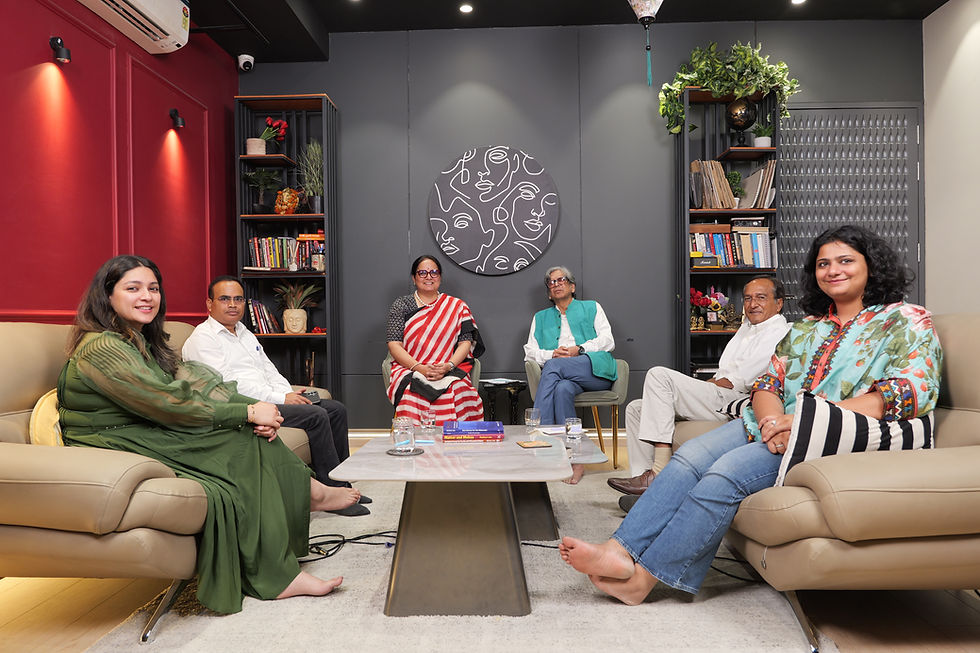
The 35th Punya-Smaran of Pandit Phoolchandra Shastri Siddhantacharya Ji was commemorated through an online symposium organised by the Shri Ganesh Varni Digambar Jain Sansthan, Nariya, Varanasi, on 31 August 2026. Dr. Medhavi Jain, Founder of Dharma For Life, was invited as the Chief Guest. The programme brought together scholars, academics, students, and admirers of Pandit Ji to reflect on his remarkable contribution to Jain scholarship, education, social reform, and institution-building.

The speakers presented different facets of Pandit Ji’s multifaceted personality and work. Prof. Ashok Kumar Jain, his son, offered an intimate account of his simple life, discipline, scholarship and extraordinary work ethic. Prof. Kamlesh Kumar Jain highlighted his deep engagement with Jain Agama and philosophy, his insistence on authenticity and his reliance on original sources, reasoning and evidence. Prof. Phoolchand Jain ‘Premi’ spoke about his contribution to translating and preserving complex scriptural traditions, including the Shatkhandagama and Dhavala-Jayadhavala tradition. Shri Anubhav Jain emphasised his belief that knowledge should not be monopolised and that difficult knowledge must be made accessible to wider society and future generations.
Other speakers brought out the social and educational dimensions of his life. Shri Amal Chawre spoke of Pandit Ji’s courage in questioning social practices such as caste-based discrimination, social exclusion and restrictions on temple entry, grounding his reformist position in the fundamental Jain principle of the spiritual equality of all souls. Shri Chintamani Bhus highlighted his contribution as a freedom fighter, educationist and institution-builder, while Prof. Ashok Kumar Jain of Banaras Hindu University reflected upon his extensive literary, social and institutional contributions and his ability to bring together “principle and practice.” Shri Manish Modi highlighted Pandit Ji’s questioning spirit and his ability to engage with difficult questions without compromising either faith or reason. Shri Keshavdev Jain, his disciple, concluded by highlighting the personal impact of his fearlessness, commitment to Agama, and indifference to personal recognition.
In her address as Chief Guest, Dr. Medhavi Jain reflected on Pandit Ji’s legacy through two broad themes: his vision as a scholar and society's responsibility to engage in self-reflection. She observed that a scholar's legacy cannot be measured merely by the number of books he has written. It lies equally in the knowledge tradition he strengthens, the questions he leaves behind, the people he inspires and the institutions he builds so that knowledge can continue beyond his lifetime.
She particularly highlighted Pandit Ji’s deep scholarship, command over language and grammar, discipline and remarkable commitment to work despite limited material resources. His life demonstrated that scholarship requires sustained effort and that institutions can be built only through dedication, perseverance, and hard work.
A central point of her address was the need to make difficult knowledge accessible. Pandit Ji’s engagement with complex philosophical and scriptural texts was not merely an exercise in preservation; it was part of a larger effort to interpret, organise and transmit knowledge. Dr. Jain suggested that this remains an important responsibility for scholars and institutions today—to ensure that Jain thought does not remain confined to specialists but becomes accessible to householders, students and younger generations.
She also emphasised scholarship's role in holding a mirror to society. Study should lead to self-examination and transformation. In this context, she referred to the Jain understanding of the Shravaka and the four pillars of Samyaktva—Praśama, Saṃvega, Anukampā, and Āstikya—as principles that encourage inner discipline, compassion, responsible conduct, and spiritual awareness.
The address also stressed that responsibility towards society and the nation is as important as self-study. Pandit Ji’s life demonstrated that scholarship, spirituality, social responsibility and nation-building can—and should—coexist.

The symposium ultimately moved beyond remembrance towards a discussion on how Pandit Ji’s legacy can remain a living tradition. Among the possibilities discussed were stronger networks among scholars, greater opportunities for young researchers, digitisation of traditional knowledge, translation and simplification of difficult texts, and greater dialogue between India’s diverse philosophical traditions.
The 35th Punya-Smaran thus served not merely as a tribute to a distinguished scholar, but as an invitation to reflect upon the responsibilities of the present generation. Pandit Phoolchandra Shastri’s enduring message lies in the integration of deep learning, intellectual courage, social responsibility, simplicity and institution-building. His life reminds us that knowledge acquires its fullest meaning when it is pursued sincerely, questioned fearlessly, shared generously and ultimately placed in the service of society.


Comments